Mô tả sản phẩm
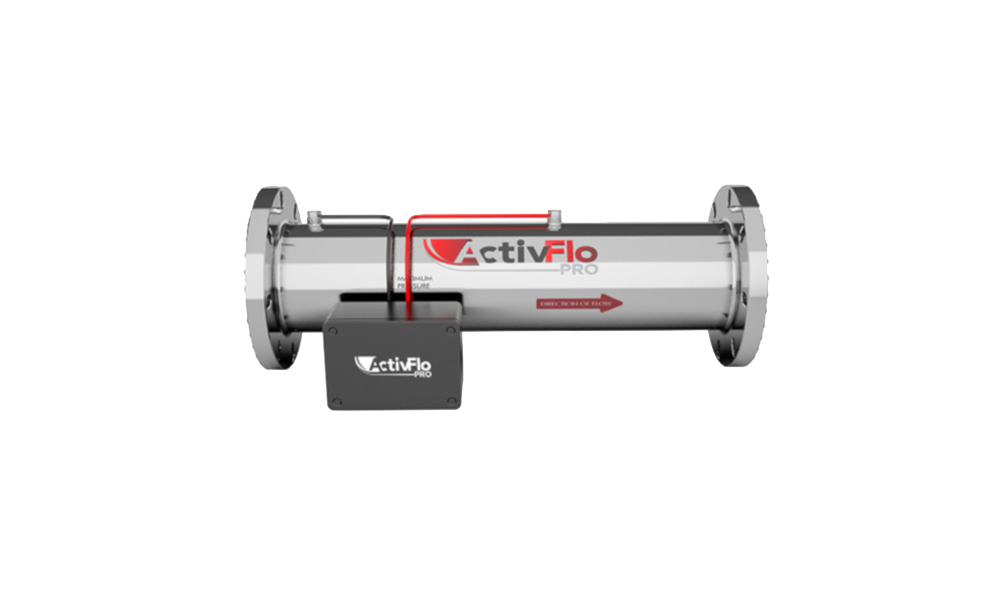
By installing a chemical-free ActivFlo hard water conditioner from INTA (UK), water used for agricultural irrigation can be conditioned to help control the effects associated with hard water and mineral deposits.
In agricultural applications, irrigation water containing high levels of dissolved minerals can contribute to mineral accumulation within irrigation pipework, valves and drip-irrigation components. Hard-water and mineral deposits may gradually restrict water flow and affect the performance of irrigation equipment.
ActivFlo Pro provides a catalytic water-conditioning approach designed to help control these effects without adding salt or chemical treatment agents to the irrigation water. This makes it a potential solution for modern agricultural irrigation systems where efficient water use, equipment protection and reduced maintenance are important considerations.
The ActivFlo Pro hard-water treatment system for agricultural irrigation is intended to support more efficient irrigation-water management and can be integrated directly into the irrigation pipeline. Depending on the system configuration, it can be applied to agricultural water-supply and irrigation networks serving crops, greenhouses and other farming applications.
Applications in Modern Agriculture
ActivFlo Pro can be considered for agricultural water systems where hard water or high mineral content creates operational challenges. Potential applications include:
- Agricultural irrigation systems
- Drip irrigation
- Greenhouse irrigation
- Crop irrigation networks
- Agricultural water-storage systems
- Irrigation pipework and distribution systems
- Commercial horticulture
- Large-scale farming operations
The technology can also help address limescale-related problems in water-using equipment. Mineral deposits can accumulate in components such as washing machines, dishwashers, shower fittings and boilers. Installing an ActivFlo water conditioner can help condition hard water and reduce the impact of scale accumulation, potentially supporting longer equipment service life.
Available ActivFlo Pro Sizes
ActivFlo Pro is available in a broad range of nominal pipe sizes to accommodate different irrigation flow requirements and system configurations: DN15, DN20, DN25, DN32, DN40, DN50, DN65, DN80, DN100, DN125, DN150, DN200 and DN250.
The available sizes allow ActivFlo Pro to be considered for systems ranging from smaller water installations to larger agricultural irrigation networks.
The system is designed to address minerals commonly associated with hard water, particularly calcium and magnesium, which can contribute to limescale formation and mineral deposits within irrigation equipment and pipework.
For an agricultural irrigation system, the appropriate ActivFlo Pro model should be selected based on the pipe diameter, design flow rate, water quality and specific operating conditions of the installation.
Đặc tính thiết kế
The ActivFlo approach can provide several potential benefits for agricultural water systems:
- Helps save three valuable resources: water, energy and operating costs
- Helps protect soil for future generations by supporting the management of mineral and salt-related effects
- Improves water infiltration into the soil
- Can reduce overall irrigation-water requirements
- Supports healthy crop growth
- May contribute to improved crop yield and productivity
- Helps reduce leaf scorch associated with mineral-rich irrigation water
- May reduce dependence on fertilizers in applications where mineral accumulation affects nutrient availability
- Helps reduce the effects of salts and minerals present in irrigation water
- Helps protect irrigation pipework from corrosion
- Helps keep drip-irrigation lines cleaner and reduce mineral blockage
- Supports smooth operation of ball valves and irrigation outlets
- Helps inhibit algae growth, contributing to cleaner irrigation tanks and channels
- Provides a more usable water supply for agricultural applications
- Simple installation with minimal maintenance requirements
For drip irrigation in particular, controlling mineral deposits can be important because small passages and emitters are susceptible to blockage. Keeping irrigation lines and components cleaner can help maintain more consistent water distribution across the irrigation network.
 0962875986
 sales@pgtech.com.vn
 Giỏ hàng