 0962875986
 sales@pgtech.com.vn
 Giỏ hàng


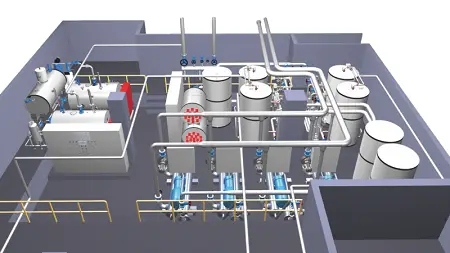
Fully Automatic Kitchen Grease Separation Technology by Techneau
09/04/2026
Lượt xem: 262
Commercial and industrial kitchens in factories, restaurants, hotels, resorts, and similar facilities generate large amounts of grease, sludge, and food residues. When these wastes are discharged directly into drainage systems or sewer networks, they can cause severe water pollution and pipe blockages.
Techneau, a leading French company specializing in the design and manufacturing of advanced water treatment solutions in Europe and worldwide, offers a wide range of products, including grease separators, industrial oil separation systems, wastewater pumping stations, and rainwater treatment equipment.
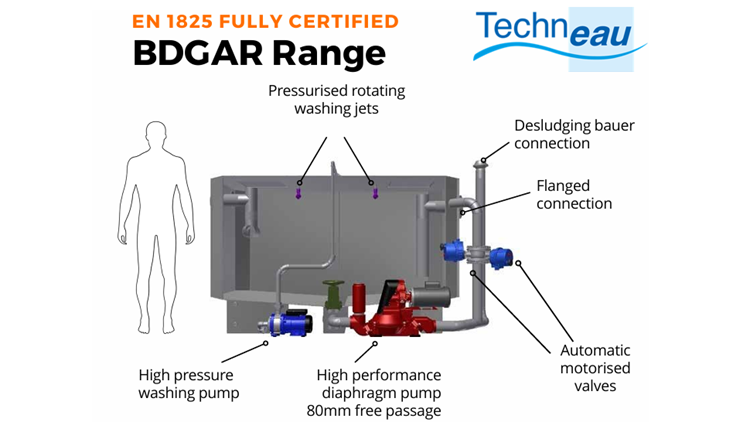
Among these, Techneau’s fully automatic kitchen grease separators are specifically designed for applications such as hotels, resorts, hospitals, and restaurants. These systems integrate advanced features such as:
- A booster pump for automatic flushing
- A high-pressure spray system for effective cleaning of residues
- A heating element to completely liquefy grease for efficient separation
The unit housing is constructed from high-quality stainless steel, ensuring long-term durability and resistance to harsh operating conditions.
Before exploring the fully automatic grease separation technology developed by Techneau, it is important to first understand the general operating principles of automatic kitchen grease separators.
1. General Operating Principle of Automatic Kitchen Grease Separators
The accumulated grease layer can be visually monitored through an inspection window. Once the grease reaches its maximum level, a high-capacity discharge pump is activated. A three-way mechanical valve then sequentially switches between Position 1 and Position 2:
- Position 1 – Mixing:
The discharge pump draws a mixture of water, grease, and sludge from the bottom and transfers it to the top of the separator. The pump’s vortex impeller breaks down large contaminants into smaller particles, facilitating more efficient treatment. - Position 2 – Discharge/Treatment:
The processed liquid is discharged by the treatment pump into an external storage tank. After the process is completed, the separator is refilled with clean water via the refill unit by manually opening the ball valve.
The PUMP model is equipped with a fully automated discharge system, controlled by a programmable system and integrated with a treatment pump. When grease accumulation reaches the maximum threshold, the grease alarm activates the automatic treatment cycle:
- The mixer is first activated to homogenize grease, water, and solid residues.
- The treatment pump is then engaged to empty the separator.
- After complete discharge, the unit can be rinsed by refilling with clean water through the refill system, followed by mixing and re-discharge using the treatment pump.
- Finally, the separator is refilled with clean water, ready for the next operation cycle.
This automated process ensures efficient grease removal, minimal manual intervention, and optimal hygiene for commercial kitchen wastewater systems.
Learn About Integrated Submersible Wastewater Pumping Stations – An Efficient Solution for Villas, Residential Complexes, and Hotels
2. Operating Guidelines for Techneau Automatic Kitchen Grease Separators
The operational rules for Techneau automatic industrial kitchen grease separators must be adapted to local conditions and integrated with water management regulations in accordance with TNV 75 6911.
Operators of Techneau automatic grease separators are required to:
- Ensure that inspection and maintenance are carried out by a designated and trained professional or certified service provider.
- Maintain an operation logbook, recording all operational activities and completed maintenance tasks.
- Conduct sampling and evaluation of wastewater in compliance with the requirements of local water management authorities.
These practices help ensure regulatory compliance, operational reliability, and optimal performance of the grease separation system.
2.1 General Guidelines
Permissible pollution parameters for wastewater are defined by the local water or wastewater management authorities. The design principles for grease separators are specified in EN 1825-1, while installation, operation, and maintenance must comply with EN 1825-2.
Operators must strictly follow the instructions outlined in the operating regulations and the guidelines provided by the supplier, manufacturer, and service organization, as recorded in the operation logbook.
2.2 Routine Maintenance Activities
Maintenance personnel should regularly perform the following tasks:
- Conduct periodic inspections of the automatic kitchen grease separator, typically every 2 to 3 weeks, or based on actual load conditions (refer to EN 1825).
- Perform immediate inspections following emergency events such as fire, flooding, or major oil/grease spills.
2.2.1 Instructions for Performing Operational Tasks
The automatic kitchen grease separator must always be filled with water before being put into operation. The pump control panel should be in standby mode, indicated by a green light.
Routine Inspection
The unit is equipped with a control box that monitors system status and detects grease accumulation inside the separator through the AG (Alarm Grease) warning system. Therefore, frequent manual inspections are not required unless service intervention is needed.
However, the following checks should be carried out regularly:
- Check the overall condition of the unit, especially ensuring that the inlet cover is properly sealed.
- Inspect the sludge chamber and measure the sludge layer height from the bottom of the tank (or by using a measuring rod/telescopic tube in low-ceiling conditions).
- The reference position of the measuring rod relative to the empty separator bottom, as well as the critical sludge accumulation level, must be clearly marked.
- The accumulated sludge must not exceed one-third (1/3) of the separator height, measured from the bottom of the empty unit.
These procedures ensure safe operation, optimal performance, and extended service life of the automatic grease separator system.
2.2.2 Inspection of the Control Panel and Standby Mode
Check the operation logbook and record all findings. If any malfunction or abnormal condition is detected, a qualified service company must be contacted to carry out corrective actions.
2.2.3 Removal and Disposal of Separated Substances
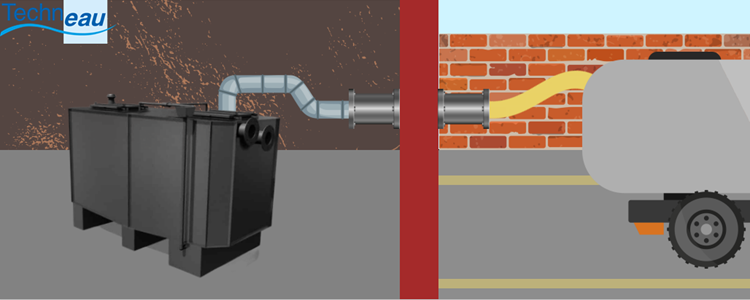
At the operator’s request—but at least in accordance with the recommended intervals specified in EN 1825—an authorized hazardous waste service provider must fully evacuate the collected waste.
Before starting the process, hot water should be supplied to the spray system for 5 to 10 minutes to liquefy any solidified grease on the surface. Once connected, the EO pump is activated, and the sludge and sediment extraction function is initiated. All waste is discharged via the EO pump, and internal cleaning is strongly recommended.
After complete emptying and internal cleaning of the EO pump system, the unit must be refilled with clean cold water.
The pump control panel is equipped with a locking mechanism to prevent unauthorized access. A probe installed within the EO system ensures that the pump automatically stops when the waste tank is nearly empty. The grease alarm probe must be carefully cleaned after each maintenance cycle to prevent malfunction. After cleaning, it should be correctly reinstalled from below, and the control cabinet should be reset.
Operating Principle of the Techneau Automatic Kitchen Grease Separator
During operation, the pump continuously circulates the liquid to prevent grease from solidifying on the upper sections of the unit. At the same time, high-pressure spray nozzles are activated to assist in removing dirt and grease deposits from internal surfaces.
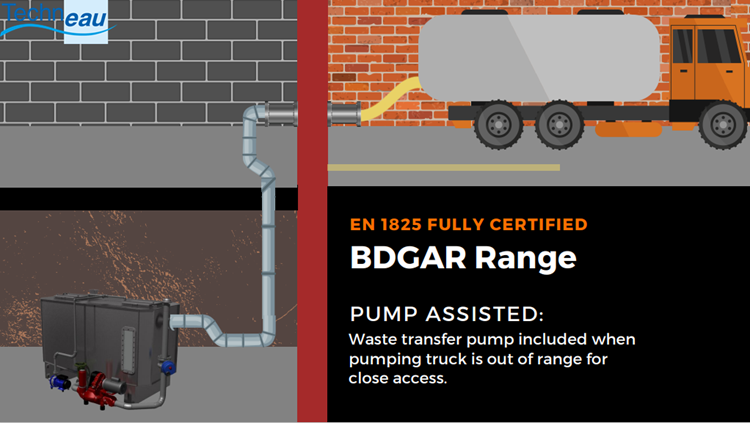
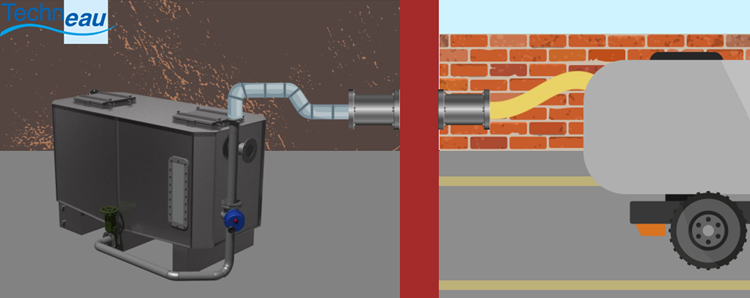
A high-performance 80 mm diaphragm pump then transfers the separated grease from the internal storage tank of the automatic separator to an external tanker or container. The control panel is programmable, allowing users to select operating intervals such as 24 hours or 48 hours, ensuring flexible and efficient system operation.
2.2.4 Sampling
Samples must be collected from a dedicated sampling chamber located directly at the outlet of the industrial/automatic kitchen grease separator.
Notes for Operating Automatic Grease Separators in Winter
The automatic kitchen grease separator should be installed or stored in a frost-free environment. When this condition is ensured, winter operation does not require any additional restrictions.
Common Operating Conditions and Corrective Actions
- Sludge layer reaching maximum limit:
The accumulated waste must be pumped out and treated by a qualified professional service company. - Surface grease layer reaching maximum limit:
The grease must be extracted and handled by an authorized waste treatment service provider.
These measures ensure safe operation, regulatory compliance, and consistent performance of the grease separation system. The EO pump may only be operated and maintained by a person over 18 years old, who has been properly trained, instructed, and is physically and mentally fit. The operator must be recorded in the operation logbook, including details of their training. 2.3.1 Overview Safety and hygiene regulations must be clearly displayed on a visible board near the operating area, allowing operators to quickly access emergency contacts when needed: 2.3.2 Workplace Safety Open manholes must be properly secured to prevent falls, preferably with the presence of an additional worker. During operations, the following must be ensured: 2.3.3 Fire and Explosion Safety The decomposition of organic substances inside the automatic kitchen grease separator may generate gases, including flammable gases. The level of risk depends on various factors such as temperature. Therefore, strict safety precautions must always be followed: 2.3.4 Environmental Safety Leachate is considered hazardous waste and can contaminate large volumes of water and soil. Such waste must be handled by specialized treatment companies. Waste management must comply with Waste Act No. 185/2001 Coll. and the guidelines of relevant local and regional environmental authorities. All waste transportation must be documented and traceable. Companies and contractors must obtain proper authorization for hazardous waste handling. Environmental inspection authorities may impose penalties for violations of regulations and policies. 2.3.5 Prohibited Actions Operators are not allowed to perform any actions or procedures not specified in the operating regulations or official documentation. In particular: These guidelines ensure safe operation, environmental protection, and regulatory compliance for automatic kitchen grease separator systems. A professional maintenance organization is a company equipped with the necessary technical resources and qualified personnel, and is authorized to handle and treat waste. Each automatic kitchen grease separator must have an operation logbook. The following information must be recorded: The operation logbook must be made available to water management authorities and approved contractors or maintenance companies upon request. PGTECH is the authorized distributor of Techneau in Vietnam, offering fully automatic kitchen grease separator systems. These systems are equipped with integrated waste transfer pumps, enabling operation even when vacuum trucks cannot access the installation area. Techneau’s grease separators for restaurants, hotels, resorts, factories, hospitals, and commercial kitchens feature advanced functionalities such as: This represents the fully automatic kitchen grease separation technology from France, delivering high efficiency, hygiene, and ease of operation. For detailed consultation and system selection, please contact us directly for expert support tailored to your project requirements. PGTECH GROUP LIMITED – Authorized Distributor of HVAC System Products in Vietnam and Regional Markets News Editorial Board: PGTECH Engineer: Quang Tung PGTECH GROUP LIMITED Address: 3rd Floor, Bac Ha Building C14-CT1, To Huu Street, Dai Mo Ward, Hanoi City, Vietnam TEL: +84-24-7302 3588 - Hotline: 0962 875 986 /0962 160 126 E-mail: info@pgtech.com.vn / sales@pgtech.com.vn Website: www.pgtech.com.vn2.3 Health and Safety at the Operation Site of Automatic Grease Separators
2.4 Professional Maintenance Organization
2.5 Logbook
Contact


